PL EN

HOW DO WE OPERATE?

At Enson, every project is a partnership. We act proactively – anticipating challenges and proposing solutions before they become issues.
We analyse client needs, maintain technical dialogue, and deliver tailored solutions that improve investment efficiency, optimise costs, increase energy yields and strengthen installation safety.
Our mounting systems are engineered for ease of installation and repeatability – helping teams save time on site and minimise the risk of assembly errors.
ENSON WAY

What does Enson support include?

We provide engineering and design support, aerodynamic testing, audits, installation training and technical consultancy – so each investment is secure, optimised and future-ready.

We start with a detailed review of the site, loads and project requirements. In parallel, we conduct technical consultations with the investor and contractor to align assumptions early and reduce execution risk.

Outcome: clear technical inputs, fewer changes during delivery, and better early-stage decisions.

Based on collected data, we develop a structural solution tailored to the project. We perform static calculations and prepare complete technical documentation.

Outcome: a project-ready solution – prepared for approvals and implementation.

Before works start on site, we provide a full set of execution documentation and prepare the ramming/driving plan to streamline installation and reduce the risk of delays.

Outcome: smoother approvals, structured execution and a predictable schedule.

We support the installation phase by delivering on-site training and conducting partial as well as final inspections, with documentation confirming correct assembly.

Outcome: installation confidence, higher safety and fewer on-site errors.

Why this process works for EPCs and investors

  • Reduced risk and fewer late-stage changes through strong early verification.
  • Faster decisions and smoother delivery thanks to implementation-ready documentation.
  • Repeatable installation quality supported by training and structured verification on site.

Learn more about our systems and the way we work.
Contact us with any questions – our team will recommend the solution best suited to your project requirements.
EXCEEDING ACCEPTABLE PRESSURE

How to protect warranty, safety and project schedule

solar farm pv

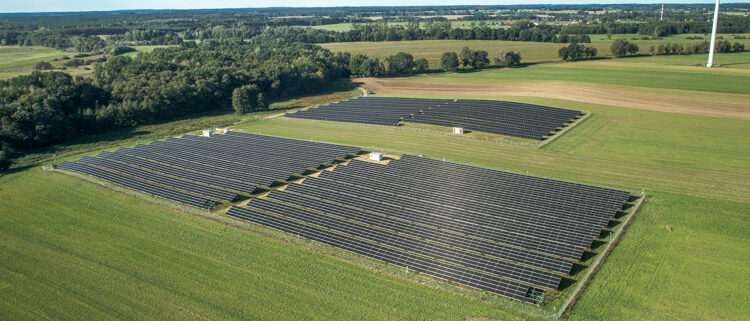
In utility-scale PV projects, wind pressure on PV modules can exceed the limits specified by module manufacturers—especially in Southern Europe. The consequences can be serious: equipment failures, redesigns, schedule impact and even loss of module warranty. At Enson, we verify positive pressure and suction (Pa) early in the design process and run technical alignment not only with investors and EPCs, but also directly with module manufacturers.

Why PV module pressure limits matter

Investors and installers are not always aware that exceeding the allowable loads stated by the module manufacturer can lead to failures and may affect warranty eligibility. In practice, this risk can include glass breakage, frame deformation and internal damage such as microcracks.

What drives suction and pressure on PV modules

As a first step, we check the maximum allowable loads for the selected module and verify both positive pressure and suction pressure, expressed in pascals (Pa). Key factors affecting module pressure include: basic wind load, characteristic ground snow load, system tilt angle, total structure height above ground, National Annexes to Eurocodes, terrain category and orography factors (e.g., mountainous areas and slopes).

Case study: SOLAR FARM in Romania

In one of our ground-mounted projects in Romania, the calculated suction pressure acting on the modules reached 3020 Pa (including safety factors). The module manufacturer defined the allowable suction limit for this load direction as 2400 Pa—meaning the calculated load exceeded the manufacturer’s value by approximately 26%.

How we resolved the exceedance without changing tilt or delaying the project

After identifying the exceedance, we initiated a technical dialogue with the module manufacturer. Based on yield and ROI considerations – and to maintain the original tilt angle assumed in the project – we proposed and implemented a solution using double module mounting (reinforcing brackets and fastening points) without changing the tilt angle. This approach met operational requirements while preserving the schedule and the project’s economic assumptions. No major technical redesign or extended administrative procedures were required.

Warranty protection: compliance with manufacturer mounting guidelines

A critical element of this implementation was maintaining full compliance with the module manufacturer’s mounting guidelines. Following the installation instructions and formal technical alignment with the manufacturer allowed the project to retain the module warranty. Since modules are among the most important – and most expensive – components of a PV plant, early technical validation plays a key role in protecting both safety and the investor’s interests

Alternative approaches: when tilt or orientation changes are viable

In other projects, alternative measures may include adjusting the system tilt angle or changing the plant orientation from south-facing to east-west, if the design phase allows. East-west systems and lower-tilt configurations can reduce effective wind loads acting on modules and may deliver structural cost benefits. Any such change, however, requires a yield impact assessment and an economic analysis.
It is also worth noting that some module manufacturers allow installation on an additional support rail, which can increase maximum allowable module pressure values. While this improves structural performance, it also increases system mass and therefore construction cost – so it is typically used only when other reinforcement methods are insufficient or not feasible.

Why this topic is becoming more important

Climate change – and the increasing frequency of severe weather events, including strong gusty winds – makes correct wind load verification essential. Extreme wind events that were once occasional are now appearing more frequently and with greater intensity.

Ignoring module load verification or using a system that exceeds manufacturer limits can expose investors to warranty loss regardless of whether a future issue is mechanical or electrical. It may also complicate warranty claims in cases of glass breakage, frame deformation or internal damage such as microcracks. From a safety perspective, a detached panel is a serious hazard – debris can damage infrastructure and pose risks to people.

Would you like to verify the loads on PV modules and select a safe structural solution without affecting yields and schedule? Contact us — we will help you choose the solution best suited to your requirements.

Download our case study from a solar farm in Romania.

PV Mounting Foundation Systems

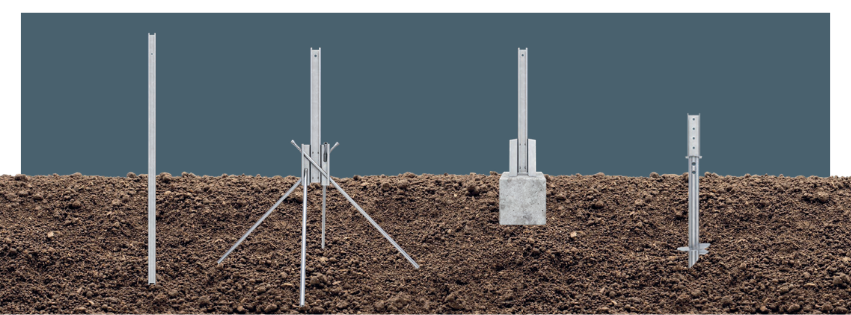
Selecting a PV mounting foundation system (piled, screw-in, ballasted or root-type) should be based on proper ground verification and pull-out testing, because these results drive structural safety, installation speed and overall project cost.

PV Mounting Foundation Systems

In utility-scale PV, engineering decisions don’t start with steel – they start with site validation. Before a final offer is issued, the key question is how the ground behaves under real loads, especially in markets with rigorous technical standards and documentation requirements (e.g. DACH).

That’s why pre-development often includes on-site geotechnical verification and load testing, including pull-out, compression and load tests. These results provide certainty: they help determine compression resistance, pull-out capacity, stability, and they provide information for the optimal foundation depth as wel as installation strategy (ramming plan). In practice, this phase often decides whether a project moves forward efficiently – or returns to redesign due to incorrect foundation assumptions.

Only then does the foundation approach get selected: piled, screw-in, ballasted or root-type. Each option has different implications for cost, schedule, equipment requirements and on-site risk. A well-informed choice helps avoid both overdesign (unnecessary CAPEX) and underdesign (technical and operational risk).

OUR PV Mounting Foundation Systems

Learn more about our systems, and contact us if you have any questions. Our team will be pleased to recommend the best solution tailored to your investment’s requirements.

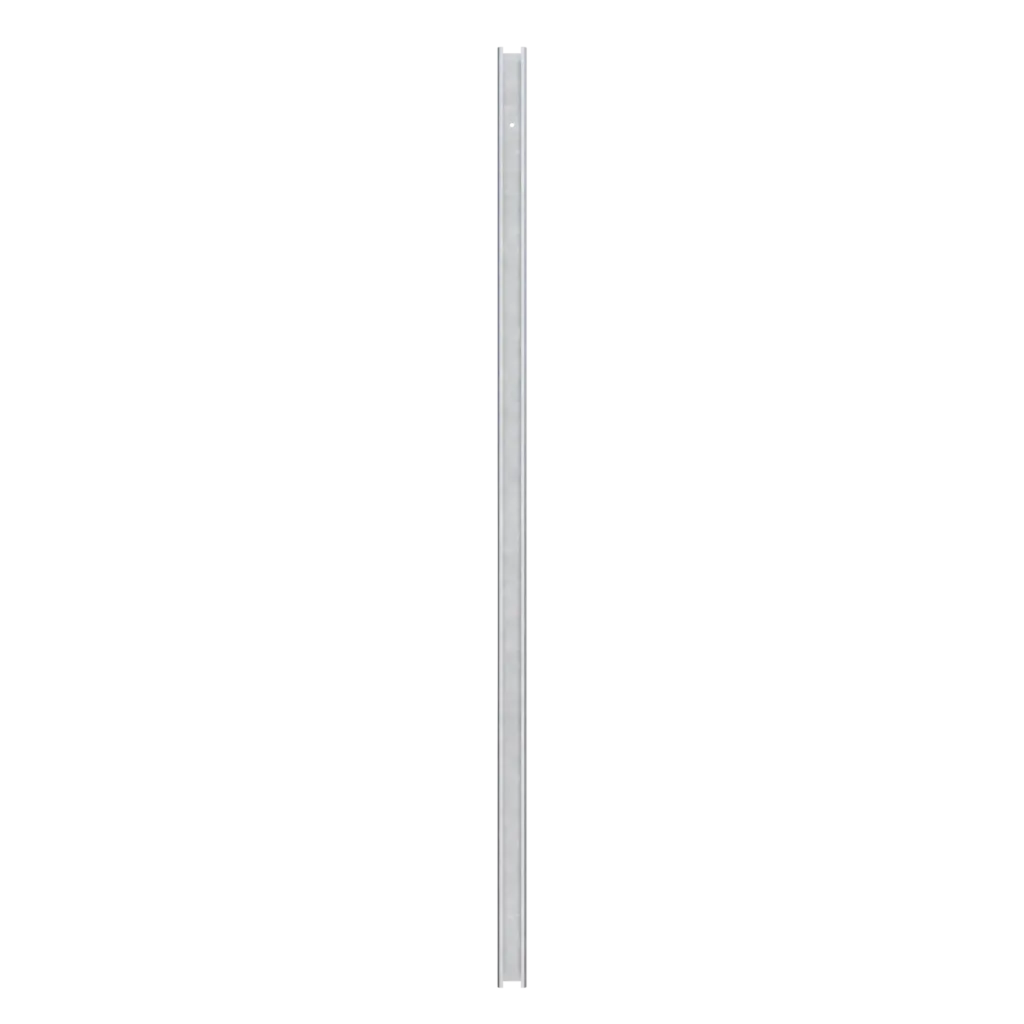
pv mounting fountation - pile system

APPLICATION:
Single-post and two-post systems

INSTALLATION:
Pile driving using hydraulic or mechanical rammers.

SUITABLE FOR:
Suitable for locations where ground penetration is allowed and confirmed by geotechnical tests.
Performs well in standard soil conditions.

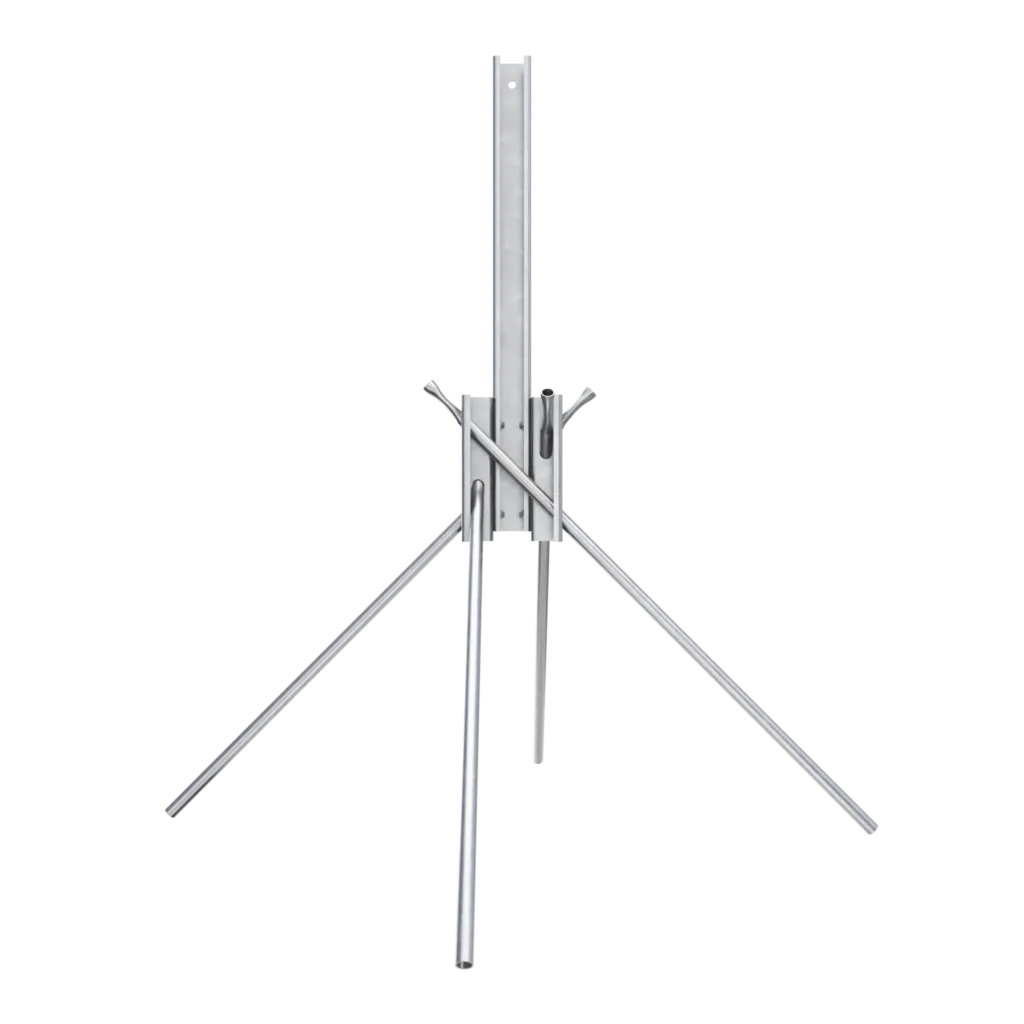
APPLICATION:
Two-post systems

INSTALLATION:
Steel tubes driven using manual or mechanical hammers

SUITABLE FOR:
An ideal solution for locations where traditional piling is not possible or where ground-bearing capacity is limited.
Suitable where deep piles cannot be used, yet stable anchoring is required. Can also reinforce existing piles where structural loads increase.

pv mounting fountation - root system
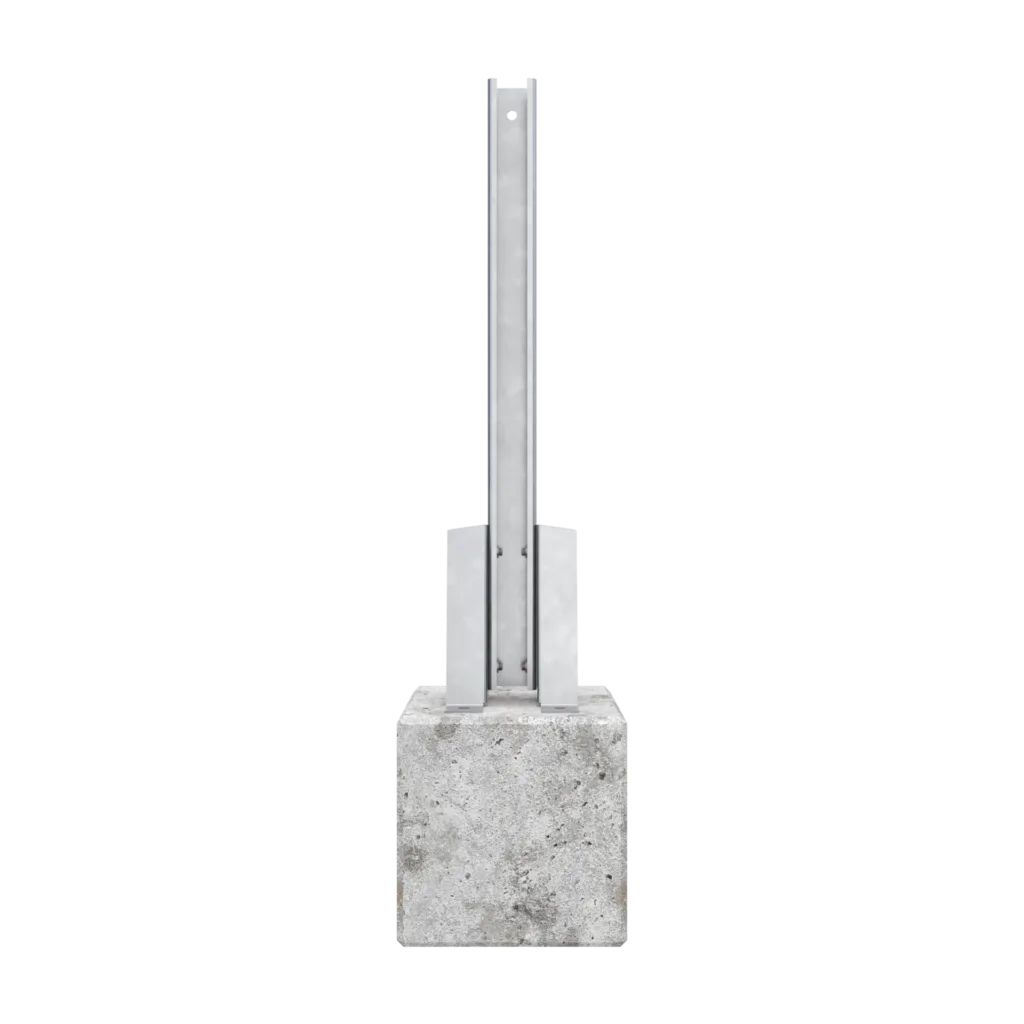
pv mounting fountation - ballast system

APPLICATION:
Two-post systems

INSTALLATION:
Chemical anchors

SUITABLE FOR:
Can be installed on low- or non-bearing soils as well as existing concrete surfaces, making it a versatile system. Requires no ground penetration, which is beneficial where excavation or piling is difficult or impossible.
Can be fully dismantled, ideal for temporary installations or relocatable projects. Suitable for non-cracked concrete foundations from class C20/25 to C50/60.

APPLICATION:
Single-post and two-post systems

INSTALLATION:
Possible manual installation (for smaller projects) or mechanical installation using excavators (for commercial projects or difficult rocky soils)

SUITABLE FOR:
Suitable for all soil types, including challenging conditions such as organic, sensitive or rocky grounds.
Particularly effective in projects requiring a large number of foundation points or where installation space is limited.

pv mounting fountation - screw system

Have a project?
Let's talk about the best solutions.

We are a partner for discussion. Our engineers proactively share knowledge and recommend optimal solutions.