
In utility-scale PV projects, a mounting structure is not simply a catalogue product. It is a part of the investment that affects installation safety, assembly speed, logistics, project costs and the long-term operation of the solar plant.
That is why it is not only the product itself that matters, but the entire process behind it: from project requirement analysis, material selection and production technology preparation to quality control, packaging and delivery to the construction site. ENSON’s own European factory gives us control over this process at every stage – and gives investors and EPC contractors greater predictability in project execution.
In utility-scale projects, predictability has real business value. It helps reduce the risk of delays, supports better construction planning and limits the number of problems that may otherwise appear only during installation.
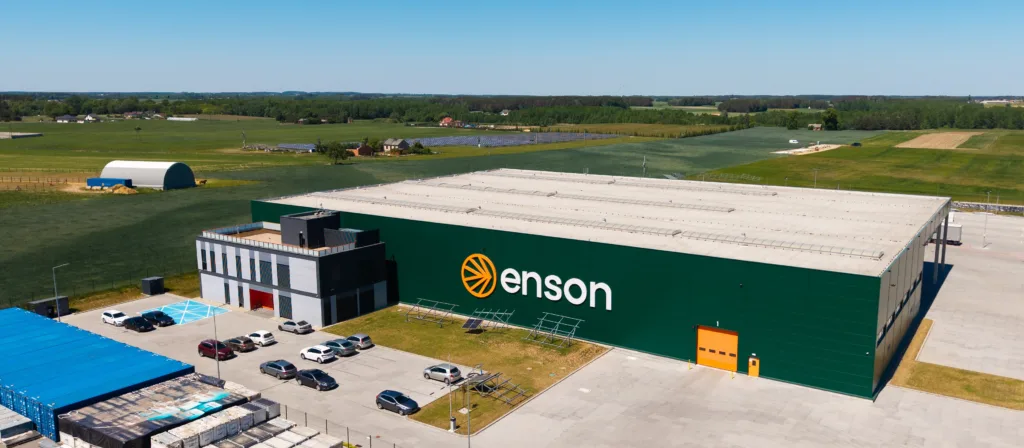
Production starts before the machines start working
The production process for PV structures begins long before steel reaches the production line. Before the material is cut and profiled, the technical documentation, material requirements, factory capabilities and delivery schedule are analysed. Based on this, the production technology is prepared: the sequence of operations, machine parameters, tooling, quality control requirements and production deadlines.
This stage determines whether production will be smooth, repeatable and fully aligned with the project assumptions. In large-scale PV plants, there is no room for randomness – every profile, hole, cross-section and packaging method must match both the documentation and the reality of installation on site.
By combining engineering, technology and production competences, ENSON is able to translate technical design into a controlled manufacturing process. This is especially important when the project requires the structure to be individually adapted to ground conditions, loads and construction schedules.
Material under control from the very beginning
One of the key advantages of in-house production is control over the material. In PV structures, steel must be consistent with the design, quality requirements and expected lifetime of the investment. It is not only about material availability – it is about confidence that the material used in production is appropriate for the specific application.
At ENSON, every steel delivery is verified in terms of compliance with the order, technical parameters, surface quality and material documentation. Each batch is marked and assigned to a specific order, ensuring traceability throughout the entire production process.
For large-scale projects, this matters. Material traceability supports quality control, improves documentation management and increases process security – especially when large volumes of components are delivered to the construction site.
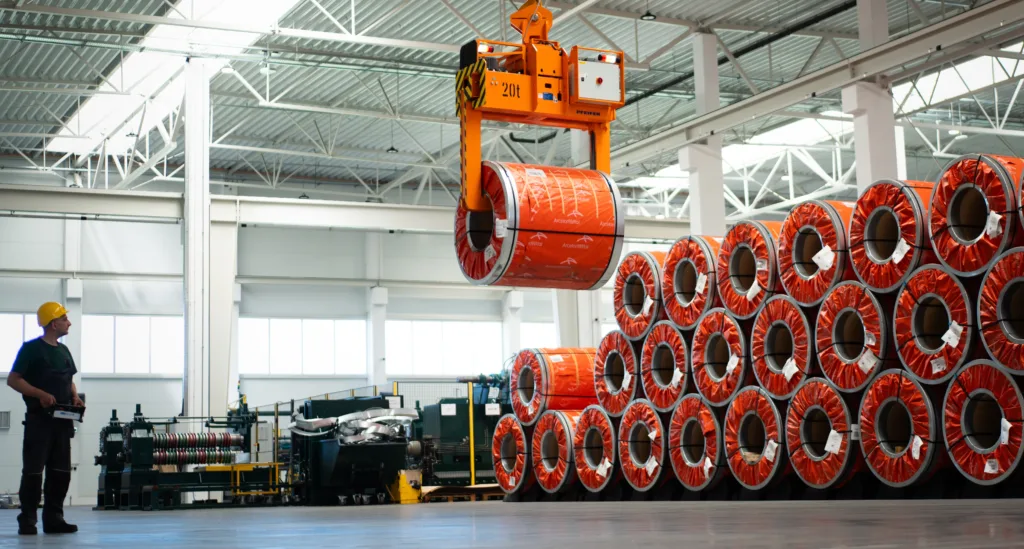
Steel slitting adapted to the project
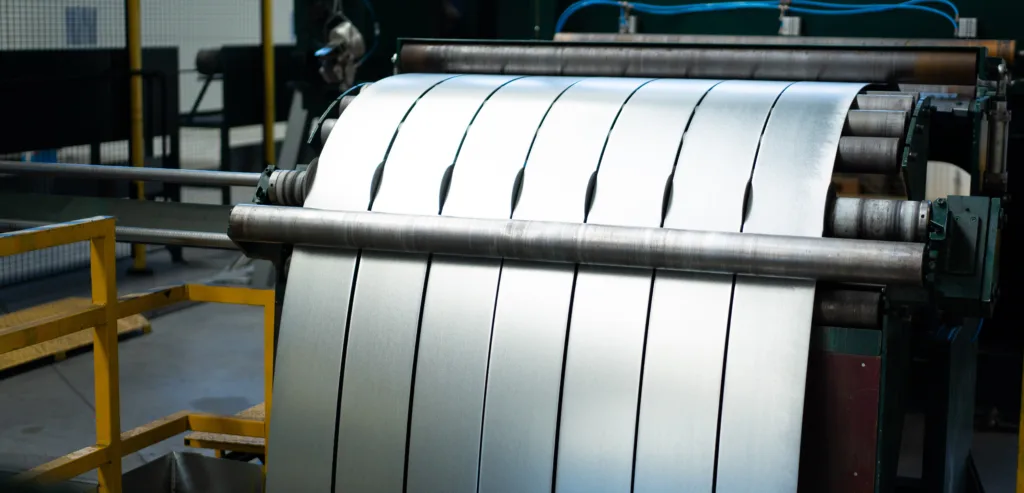
ENSON’s own slitting line allows steel strips to be prepared precisely for specific structural components. This means that we are not limited only to strip widths available in stock, nor fully dependent on external subcontractors for this stage of the process.
This gives us greater production flexibility and enables more efficient use of material. Precise slitting planning helps reduce waste, supports steel consumption optimisation and keeps the parameters of finished components aligned with project requirements.
In practice, production can be better adapted to a specific investment – both technically and organisationally. In large PV projects, where thousands of repeatable elements are produced, this level of control directly affects execution efficiency.
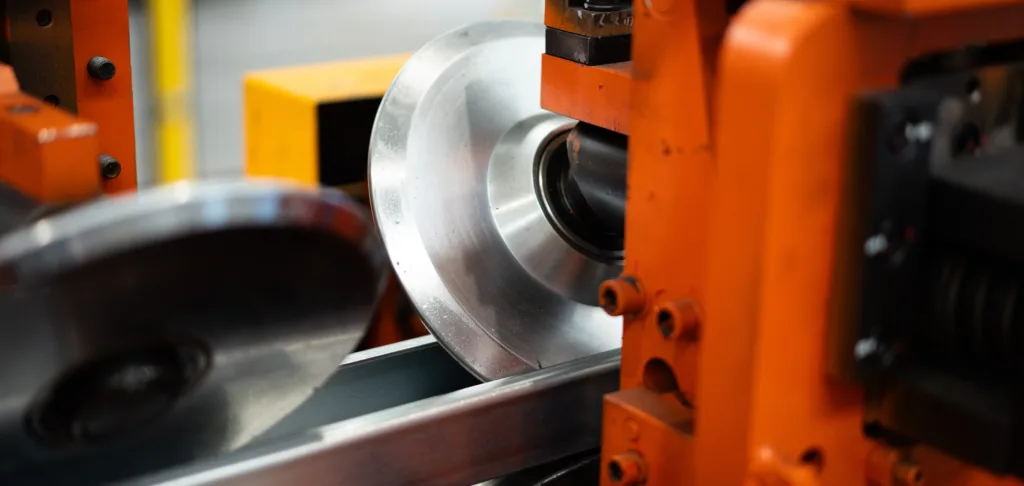
Repeatability that supports faster installation
In utility-scale PV projects, component repeatability is one of the conditions for efficient installation. If profiles differ in dimensions, markings or workmanship quality, problems quickly move to the construction site: assembly takes longer, logistics become more complex and the risk of downtime increases.
On its own production lines, ENSON forms steel strips into final shapes in line with the documentation of each project. Automation enables the production of thousands of elements with repeatable parameters, which is critical in large-scale PV projects.
Packaging is just as important. In a large investment, it is not only the final step of production, but part of project logistics. Proper marking and protection of components makes it easier to organise deliveries, identify profiles and support installation teams on site.
A well-prepared delivery reduces uncertainty on site. Components are easier to identify, easier to manage and better aligned with the installation sequence.
Quality control built into the process
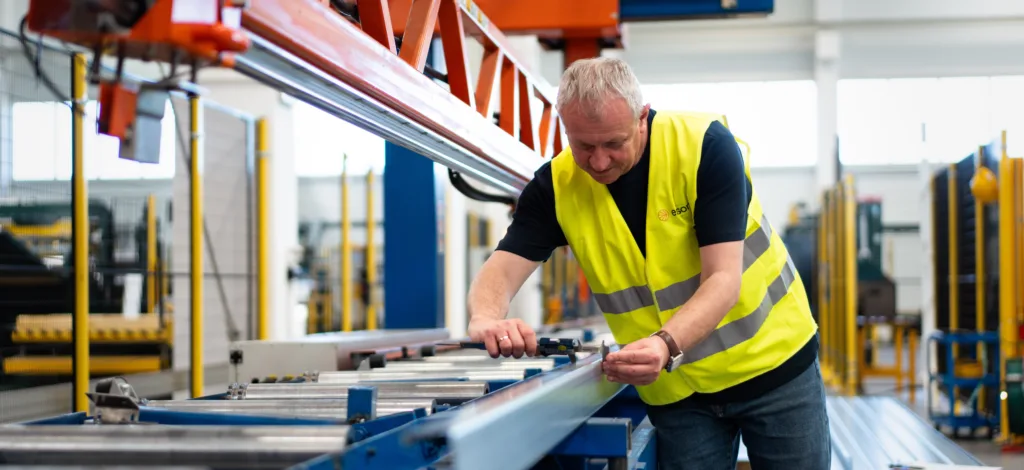
An in-house factory makes it possible to supervise quality not only at the end of production, but throughout the entire process. Component parameters are checked during production by operators and then verified by a dedicated quality team. Before serial production begins, a trial batch is also produced.
As part of production trials, ENSON verifies, among other things, cross-section dimensions, component lengths, profile straightness, surface quality and the correct execution of technological holes. Only after confirming compliance with the technical documentation is the process approved for serial production.
This supervision is part of a broader quality and production management system, supported by applicable standards and certifications, including ISO 9001, ISO 14001, Factory Production Control, CE marking and relevant TÜV certificates. As a result, the quality of the structure is not based solely on final inspection of finished components, but on organised procedures, documentation and repeatable supervision of the entire production process.
This approach reduces the risk that errors will only be discovered during installation. And that is exactly when correcting them is most expensive – because it affects not only a single component, but often the project schedule, logistics and the work of multiple teams at the same time.
European production and a shorter supply chain
ENSON’s factory is located in Poland, in the centre of Europe, and its annual production capacity of 1.5 GW supports the execution of large orders and more effective delivery planning for PV projects.
European production is not only a matter of location. It also means a shorter and more controlled logistics chain, greater flexibility in responding to project changes and the ability to align shipments with the construction schedule.
For investors and EPC contractors, this is especially important wherever delivery timing, completeness of components and process predictability influence the organisation of the entire project. The less uncertainty there is in the supply chain, the easier it is to manage construction work and reduce the risk of costly downtime.
An in-house factory as an advantage in utility-scale PV projects
In-house production gives ENSON control over what is critical in large PV projects: material, technology, repeatability, quality, packaging and logistics. As a result, the mounting structure is not a detached component, but part of a process designed for efficient and safe project execution.
For the client, this means greater confidence that the structure will be consistent with the documentation, adapted to project requirements, prepared for installation and delivered in a way that supports the construction schedule.
This is why ENSON’s own European factory is more than a production facility. It is an advantage that translates into real value across the project cycle – from technical decisions to work on the construction site.