
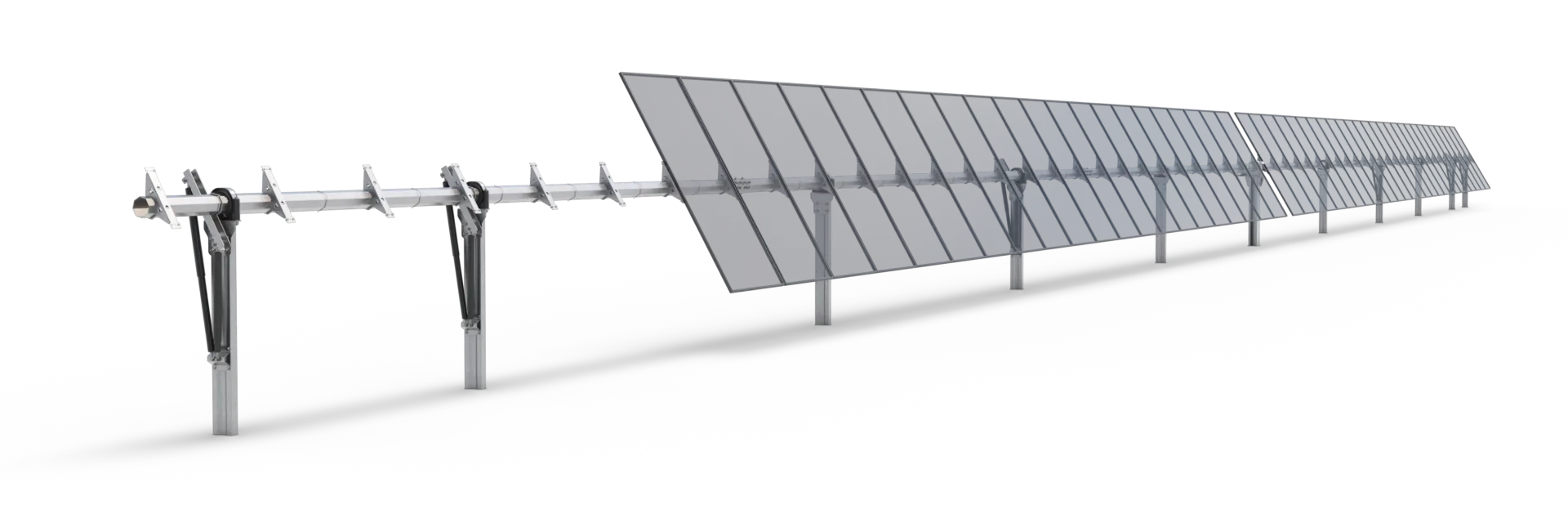
A solar tracker is more than module movement
When solar trackers are discussed, the first question is usually about energy yield. That is understandable. A tracking system is designed to help PV modules follow the sun’s position throughout the day and make better use of solar irradiation. In utility-scale PV projects, however, the decision to use a tracker goes far beyond the movement itself.
A solar tracker in a utility-scale PV project is a steel structure, a mechanical system, a module mounting solution, a cable routing concept, an automation system, an installation process and a long-term service consideration. Each of these elements influences how the system performs not only on the day the PV plant is commissioned, but also after years of operation in the field.
The ENSON tracker is a single-axis solar tracker designed for utility-scale PV projects. It is characterized by an octagonal axis, Magnelis®-coated steel, reinforced bearings, two PV module fixing methods, cable routing solutions and European Track N Co automation. The system has been developed with stable operation, long-term durability, efficient installation and predictable performance in large-scale photovoltaic projects in mind.
This matters because the value of a tracker in a large PV project does not come only from the fact that it follows the sun. It also comes from the way the entire system is designed: from axis geometry and material selection to module fixing, cable routing, automation and system operation.
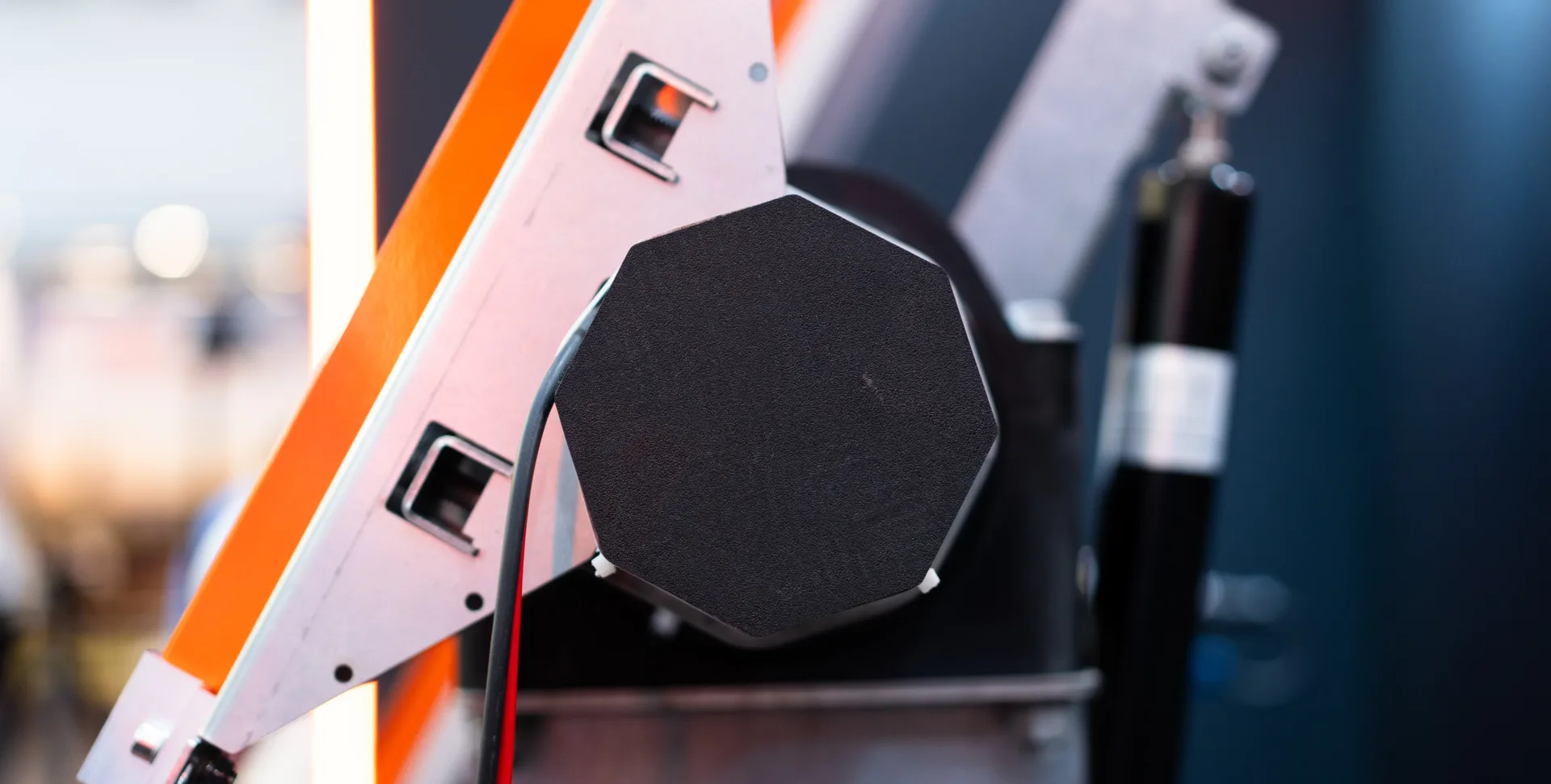
Octagonal axis – geometry that works with the structure
One of the most distinctive elements of the ENSON tracker is its octagonal axis. In a PV tracker, axis geometry is not a visual detail. It matters for the stiffness of the system, the stability of structural operation and the way loads are transferred through the tracker.
In utility-scale projects, the tracker operates in changing environmental conditions. The structure has to account for module movement, wind impact, temperature changes and the local conditions of a specific site. That is why predictable system behaviour is one of the key elements of tracker design.
The octagonal axis supports torsional stiffness and stable operation of the system. It reflects our engineering approach: instead of focusing on one isolated parameter, each design detail is considered in terms of its impact on the performance of the whole structure.
Magnelis®-coated steel – durability across the PV plant lifecycle
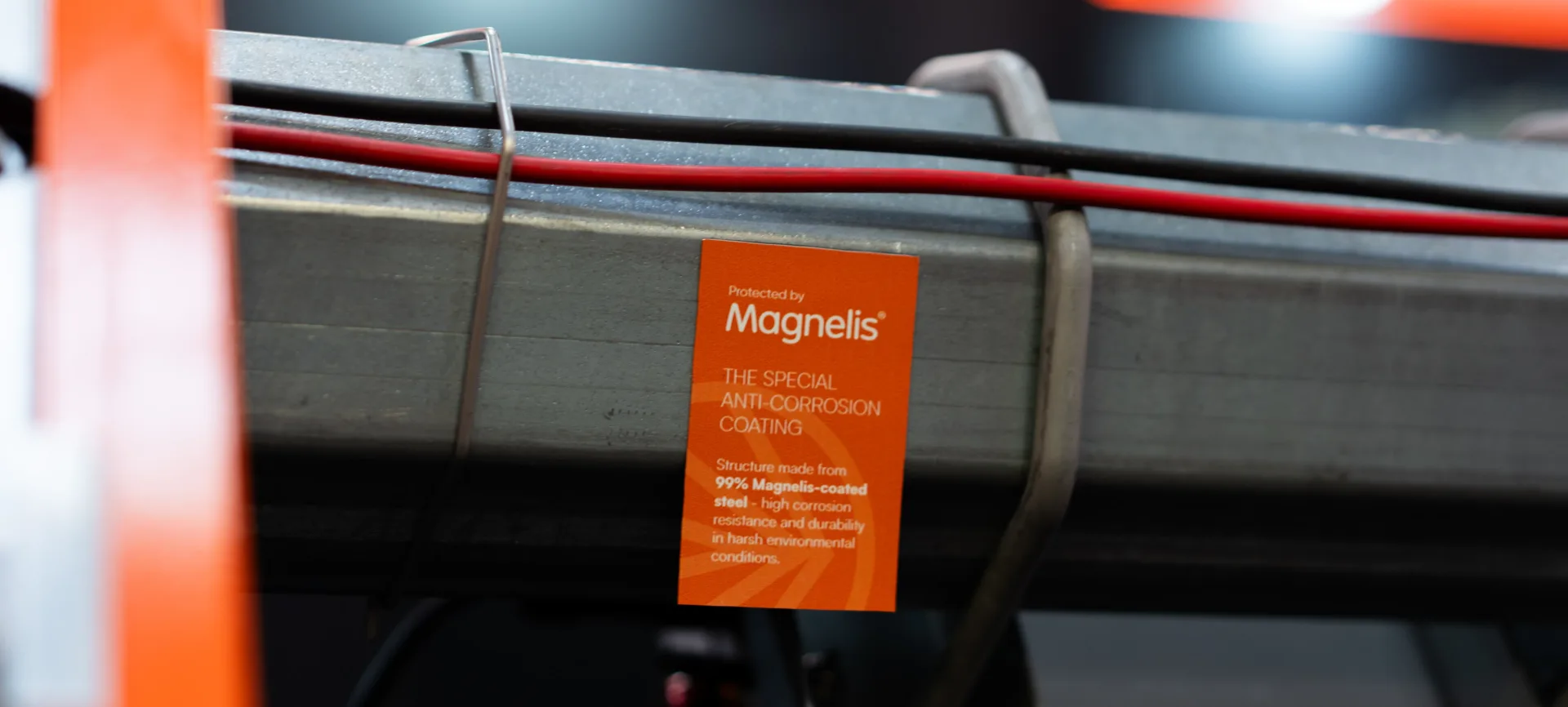
A solar tracker operates outdoors for many years. It is exposed to humidity, temperature changes, environmental impact and long-term corrosion risk. That is why material selection is not only a production decision. It is one of the factors that influence the durability and predictable performance of the structure.
The ENSON tracker uses Magnelis®-coated steel. This is a deliberate material choice that supports the environmental resistance of the structure and its long-term operation in demanding PV plant conditions.
In utility-scale PV projects, the purchase price of the structure is only one part of the decision. What matters just as much is how the system performs after years of operation in the field, how much maintenance it may require and which operational risks it helps to reduce. From this perspective, material selection has both technical and business significance. It affects safety, reliability and the total cost of ownership of the PV plant.
Reinforced bearings and centrally positioned drive
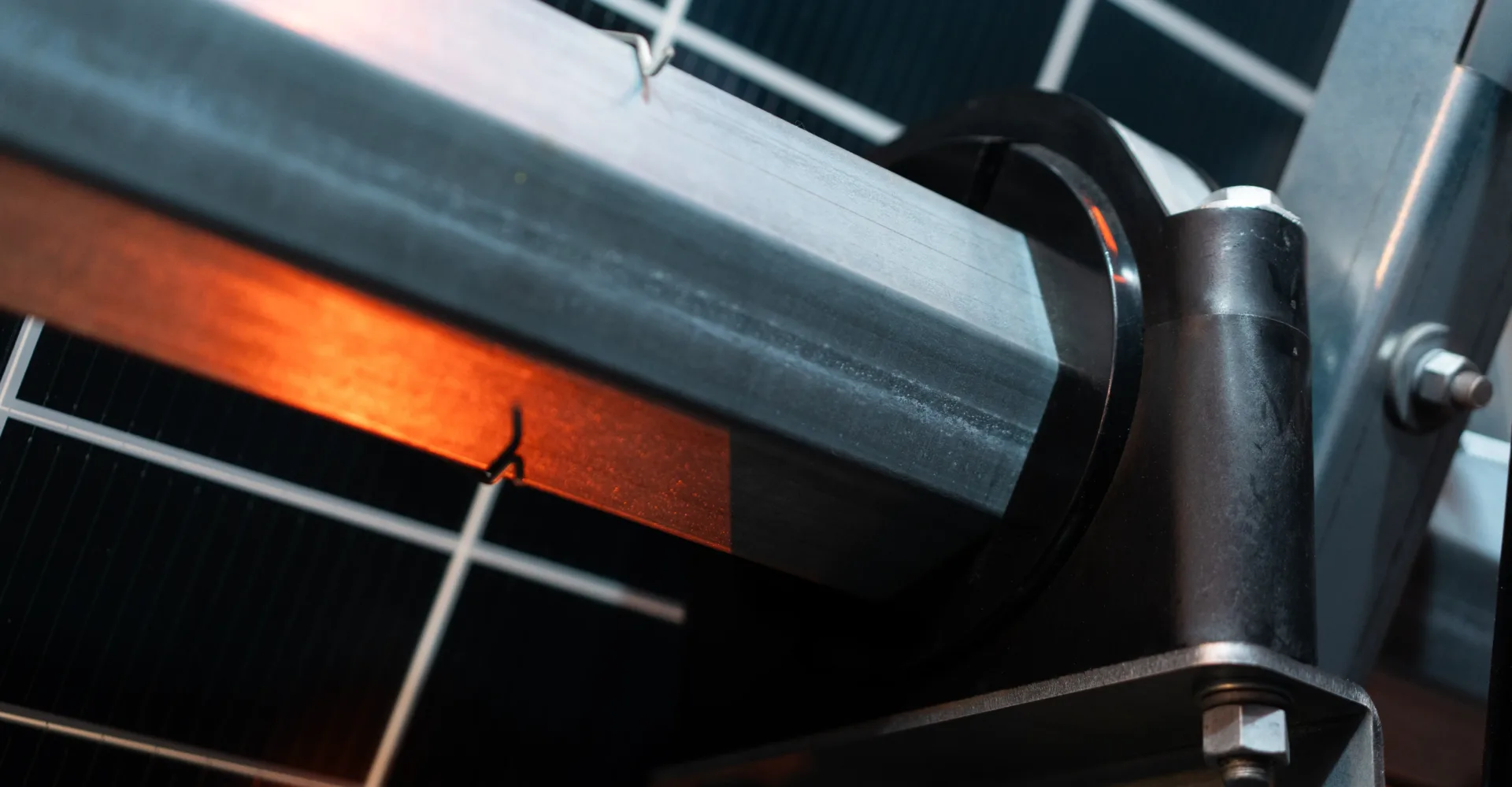
A PV tracker has to operate smoothly and predictably. In this context, not only the main structural elements matter, but also bearings, support points and the way movement is transferred through the system.
The ENSON tracker uses reinforced bearings and a single, symmetrically positioned drive. This solution supports balanced structural operation and helps control the behaviour of the system during daily operation.
For investors, this means greater predictability of system performance over the long term. For EPC contractors and technical teams, it means a structure designed with repeatability, stability and real project conditions in mind, not only catalogue assumptions.
Two PV module fixing methods: bolts or clamps
No two PV projects are identical. Different modules may involve different manufacturer requirements, support zones, allowable loads and warranty conditions. That is why the module fixing method in a tracker should be considered already at the design stage.
The ENSON tracker allows two PV module fixing methods: bolted fixing and clamp fixing. Bolted fixing provides a stable and precise connection between the module and the structure. Clamp fixing may accelerate installation on large PV farms, provided that this method is compliant with the module manufacturer’s documentation.
For EPC contractors, this means greater flexibility and the ability to better adapt the structure to a specific project, module type and preferred installation method. For investors, it means a lower risk of late-stage technical changes and greater confidence that the solution remains aligned with the module manufacturer’s requirements.
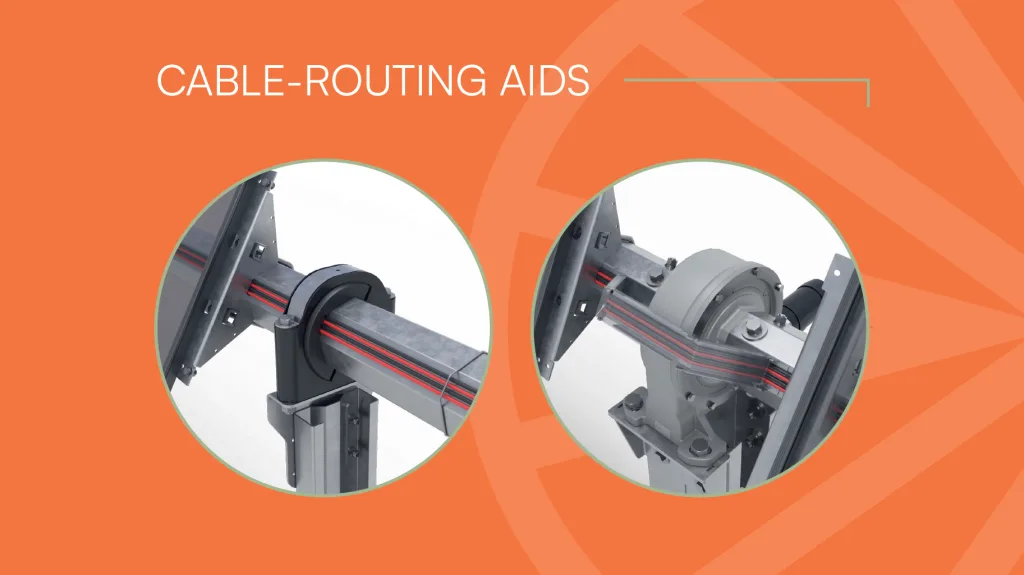
Cable routing as part of technical design
In a PV tracker, cables are not independent from the structure. They have to work with the system, taking into account module movement, the tracker’s operating range, rotation points, the mechanical safety of cables and later service access.
That is why cable routing in the ENSON tracker is treated as part of the technical design. The solution includes elements that support orderly cable routing, making installation and later system operation more repeatable and predictable.
In large PV projects, details like these have real significance. They influence installation efficiency, the ergonomics of installation teams, service access and the reduction of operational risk.
Track N Co automation
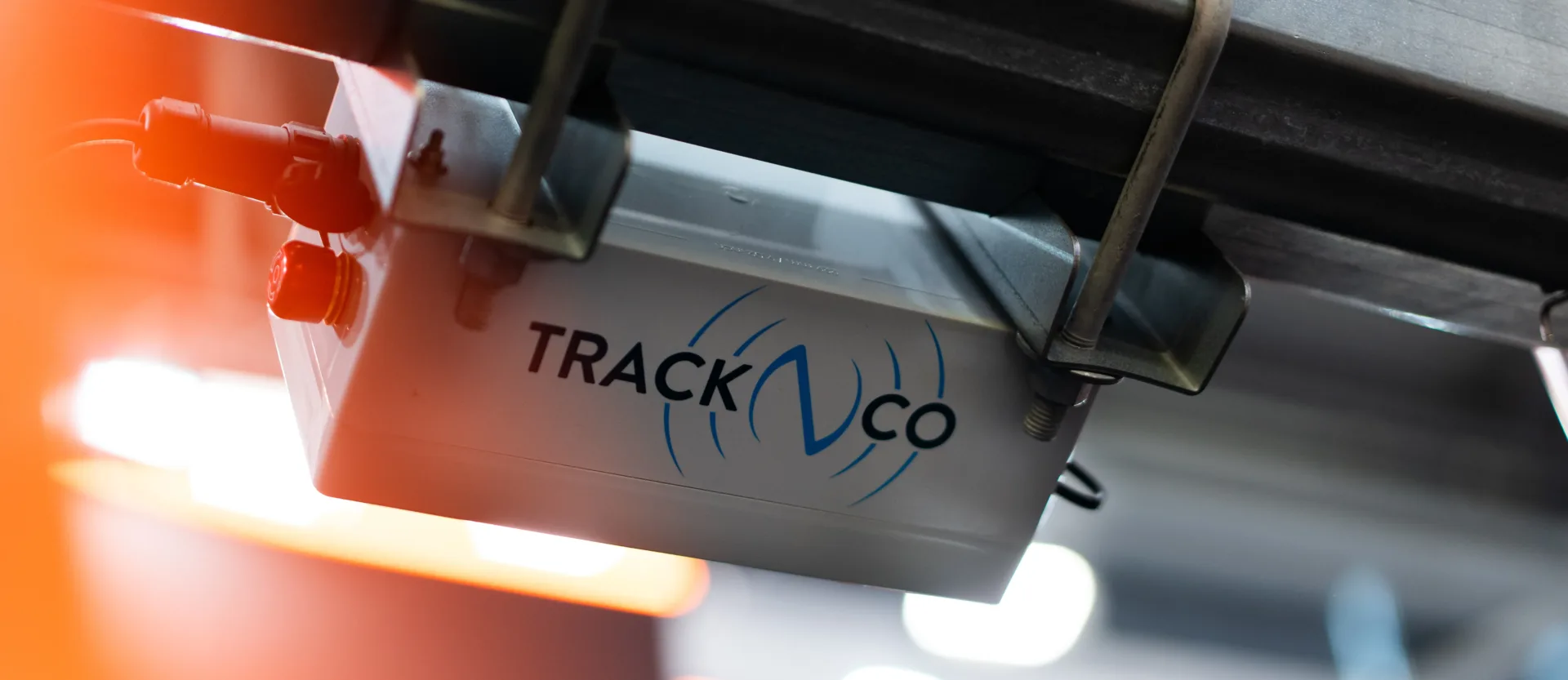
A solar tracker is not only steel. It is a mechanical system that has to work with automation and respond to the operating conditions of a PV plant. That is why the control system is an important part of the complete solution.
The ENSON tracker uses European Track N Co automation. In practice, this means the system is not designed only as a moving structure, but as a solution prepared to operate in changing terrain and operating conditions.
From the user’s perspective, what matters is not only that the tracker moves, but also how it can be controlled, configured, monitored and serviced over time. In utility-scale PV projects, automation matters both during commissioning and throughout the operational life of the plant.
The ENSON tracker from the EPC perspective
From the EPC perspective, a tracker must be not only robust, but also practical on site. Efficient installation, repeatability and flexibility to adapt to a specific project are key.
In the ENSON tracker, this logic is reflected in several areas: two module fixing methods, structure adjustment, cable routing solutions and site-specific design.
For EPC contractors, this means greater predictability during installation, easier adaptation to the module and project conditions, and a lower risk of technical changes at a later stage of project execution. In utility-scale projects, these are not minor details. They affect the schedule, site organisation and the smooth transition from structure delivery to plant commissioning.
Read more about tracker installation efficiency.
The ENSON tracker from the investor perspective
From the investor perspective, a solar tracker should support not only higher energy yield potential, but also predictable system operation over the long term.
That is why durability, operational safety, environmental resistance, automation, serviceability and total cost of ownership all matter when selecting a tracker. A well-matched structure helps reduce operational risks and supports better long-term planning for the PV plant.
The ENSON tracker has been designed for projects where both technical and economic logic matter. It is a solution for investors, developers and EPC contractors who need a system matched to the project scale, site conditions and delivery model.
Tracker or fixed-tilt? The decision depends on the project
A solar tracker is not a universal answer for every PV project. The choice between a tracker and a fixed-tilt structure should result from an analysis of technical conditions, energy production profile, business model, location, cost structure and investor assumptions.
That is why in utility-scale PV projects, product availability alone is not enough. Engineering and technical competence on the side of the structure manufacturer also matter. A tracker should be matched to the real conditions of the project, rather than treated as a standard solution for every site.
ENSON develops the tracker as part of a broader PV mounting system portfolio, so that investors and EPC contractors can select the right solution for a specific project, its scale, technical conditions and delivery model.
Enson solar tracker
Our solar tracker stands out not because of one single feature, but because of a coherent approach to the design of the entire system. The octagonal axis, Magnelis®-coated steel, reinforced bearings, two module fixing methods, organised cable routing and European Track N Co automation create a solution designed for large-scale PV projects.
In utility-scale PV, it is not only important whether a tracker can support higher energy yield. It is equally important whether it can be installed efficiently, operated safely and maintained predictably throughout the lifecycle of the PV plant.
Planning a utility-scale PV project and considering a tracker solution? Let’s discuss a structure matched to your project scale, technical conditions and delivery model.